Tired of Endless Edits? Here's Why Your Organization Needs a Messaging Guide
For the longest time, I thought endless edits were just a normal part of the creative process.
I'd share a draft for review, and suddenly everyone had an opinion.
One person described our work one way. Someone else wanted to add their own flair. Another person simply "didn't like" a word choice.
I'd dutifully go back into the document, trying to please everyone while decoding feedback that often contradicted itself.
Sometimes it took MONTHS to get anything finished.
"Dear Colleague, Here's Version 20 for your review..."
Sound familiar?
The endless edits were killing me.
Then I discovered brand messaging guides. (Cue the angels singing!)
What is a brand messaging guide?
A brand messaging guide is a shared document that captures how your organization talks about its work.
It gives everyone a common starting point, including:
- Key messages: What you want people to understand about your organization.
- Organization descriptions: Agreed-upon language for explaining who you are and what you do.
- Voice and tone: How you want your organization to sound.
- Word choices: Language your team uses consistently.
Instead of reinventing the message with every new project, your team has something to work from.
And when someone suggests changing a sentence for the fifth time, you can return to the guide and ask whether that change actually improves the message.
You don't need to rewrite your story every time
This was the big lesson for me.
We don't need to rewrite the story every time.
We just need to agree on the words that truly sound like us. Then document them.
A messaging guide gives your communications team a shared reference. It helps everyone explain the work consistently, whether they're writing a newsletter, preparing a presentation, updating a website, or talking with a potential funder.
It also makes onboarding new staff and working with outside consultants easier.
And yes, it can help AI produce writing that sounds more like your organization, too.
What does a messaging guide look like in practice?
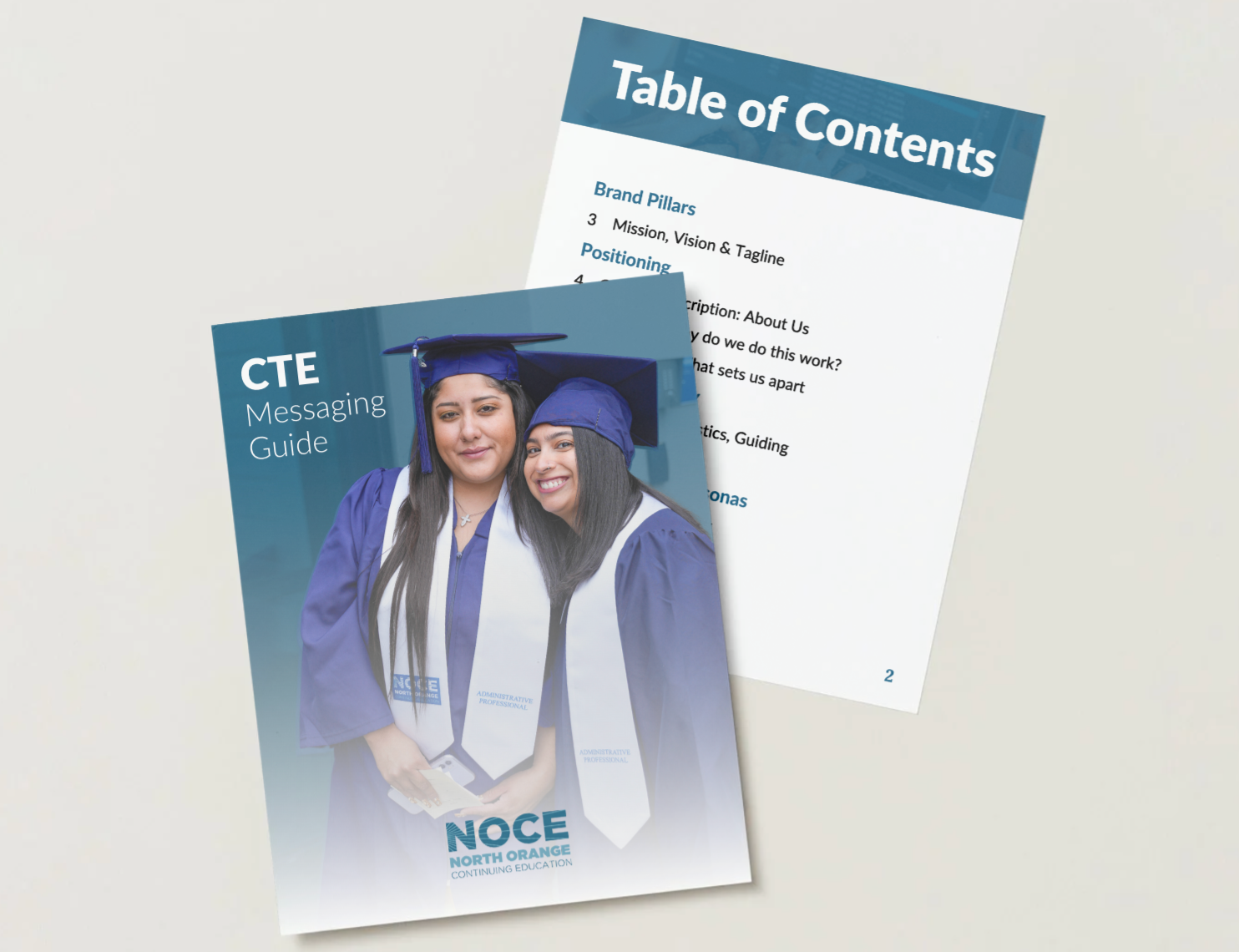
At Dream Catch, we created a messaging guide for North Orange Continuing Education's Career Technical Education program.
The guide brought together the program's messaging and brand personality in one place, giving the team a reference for communicating about its work.
Insert original image: North Orange Continuing Education CTE Messaging Guide.
That's the value of a messaging guide. It's not another document to create and forget.
It's something your team can actually use.
Start with the words you already use
You don't need to build a 30-page guide to get started.
Take a look at your website, recent proposals, newsletters, and presentations.
Are you describing your organization the same way in each one? Or does every document tell a slightly different story?
Find the language that works. Get agreement from the people who need to weigh in. Write it down.
Your future self, staring at Version 20 of that document, will thank you.
Need help getting your organization's message on the same page? Dream Catch helps organizations develop messaging guides and story-driven communications that their teams can put to work.